711 Park Avenue Northwest
Willmar, MN 56201
info@miles4mentors.org


What Finish Lines Teach Kids About Effort, Identity, and Growth
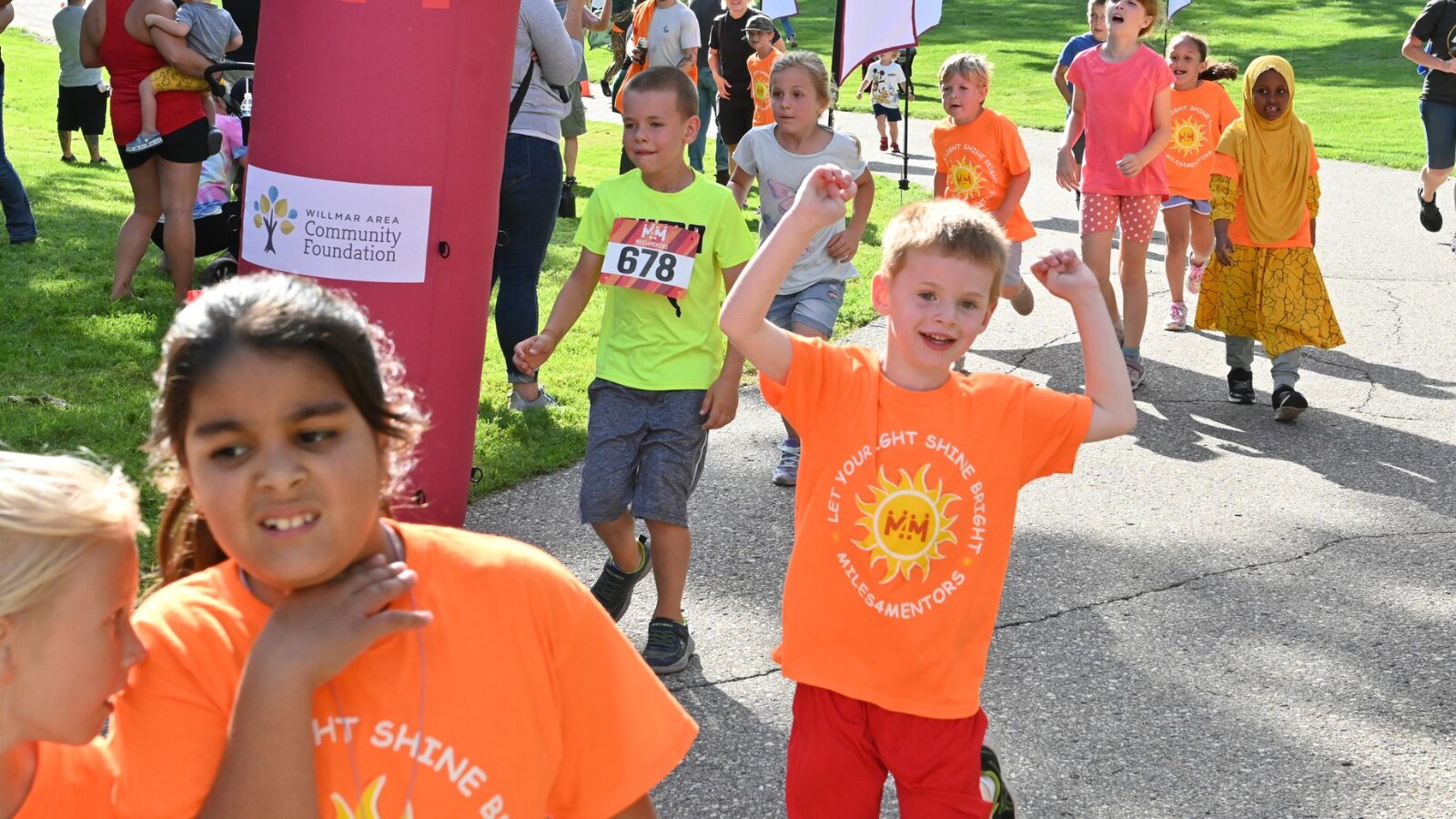
There is something unmistakable about the moment a child approaches a finish line. Their expression shifts. Their posture changes. Their steps become more intentional. Whether they are sprinting, walking, or doing something in between, the finish line becomes a place where effort turns into meaning. It is a moment that belongs entirely to them, shaped by their choices, their pace, and their courage. At Miles 4 Mentors, we see finish lines as more than markers on the ground. They are emotional landmarks. They are teaching tools. They are mirrors that help kids see themselves in a new way. And for many children, crossing a finish line, no matter how fast or slow, becomes one of the most powerful confidence‑building experiences of their year.
Finish Lines Give Kids a Sense of Completion
Children live in a world where many things feel open‑ended. School years stretch on. Friendships shift. Routines change. Even their own emotions can feel unpredictable. A finish line offers something rare: a clear beginning and a clear end.
That sense of completion matters. It gives kids a moment to say, “I did it.” Not “I did it perfectly.” Not “I did it faster than someone else.” Just “I finished what I started.”
That simple realization builds a foundation for future challenges. It teaches kids that they can follow through, even when the middle feels messy or uncertain.
Finish Lines Turn Effort Into Something Kids Can See
Children often struggle to understand the value of effort because effort is invisible. They can’t hold it. They can’t measure it. They can’t compare it to someone else’s. But a finish line changes that. It turns effort into something tangible. A child who walks the entire course still crosses the same line as the child who runs. A child who stops to catch their breath still reaches the same ending. A child who doubts themselves halfway through still experiences the moment of completion. Finish lines show kids that effort counts: visibly, clearly, and undeniably.
Finish Lines Build Identity, Not Just Confidence
Confidence is important, but identity is deeper. Identity is the story a child tells themselves about who they are. Finish lines help shape that story.
A child who crosses a finish line begins to see themselves as someone who:
- Tries
- Persists
- Finishes
- Belongs
- Can handle challenges
These are not small ideas. They become part of how kids approach school, friendships, and new experiences. They begin to think, “If I could do that, maybe I can do this too.” Finish lines don’t just build confidence. They build identity.
Finish Lines Teach Kids to Manage Discomfort
Every child experiences discomfort during a run: physical, emotional, or both. Their legs get tired. Their breathing changes. They wonder if they should slow down or stop. They question whether they can keep going. But when they reach the finish line, they learn something essential: discomfort is temporary. It is not a reason to quit. It is something they can move through.
This lesson is one of the most valuable gifts a finish line can offer. Kids who learn to manage discomfort become more resilient. They become more willing to try new things. They become more confident in their ability to handle challenges unrelated to running.
Finish Lines Create Shared Moments That Matter
One of the most beautiful parts of a finish line is that it is rarely crossed alone. Even if a child finishes on their own, they are surrounded by people cheering, clapping, and celebrating their effort. These shared moments create connection. They help kids feel seen. They show children that their community values their effort, not just their performance.
When a child hears their name called or sees someone smiling at them as they finish, something shifts inside them. They feel supported. They feel proud. They feel like they belong. This sense of belonging is one of the strongest predictors of emotional well‑being in childhood. Finish lines help create it.
Finish Lines Teach Kids to Celebrate Themselves
Children are often taught to celebrate birthdays, holidays, and big achievements. But they are rarely taught to celebrate their own effort. Finish lines change that. When a child crosses a finish line, they get a moment that is entirely theirs. They get to feel proud of something they did with their own body, their own choices, and their own determination. This teaches kids to recognize their own growth. It teaches them to celebrate progress, not perfection. And it teaches them to value the journey, not just the outcome.
Finish Lines Help Kids Understand Their Own Pace
One of the most important lessons a finish line teaches is that pace is personal. Kids learn that they don’t have to match someone else’s speed to be successful. They learn that their pace is valid, whether it’s fast, slow, or somewhere in between. This lesson extends far beyond running. It helps kids understand that:
- Learning happens at different speeds
- Friendships develop at different speeds
- Confidence grows at different speeds
- Life unfolds at different speeds
Finish lines teach kids that their pace is enough.
How Families Can Support Finish Line Moments
Parents and caregivers play a huge role in helping kids understand the value of finish lines. Here are a few ways families can support these moments:
- Celebrate effort, not speed. Kids remember what adults emphasize.
Ask meaningful questions. “How did it feel to finish?” is more powerful than “How fast did you go?” - Take photos of the moment. Kids love seeing themselves succeed.
- Normalize walking, stopping, or slowing down. These are not failures. They are part of the process.
- Be present at the finish line. Your presence matters more than your words.
Finish Lines at Miles 4 Mentors
Finish lines are woven into the heart of our mission. They are not about competition. They are about growth. They are about belonging. They are about giving kids a moment where they can feel proud of themselves in a way that is real, visible, and unforgettable. When a child crosses a finish line at one of our events, they are not just completing a run. They are building confidence. They are shaping identity. They are learning resilience. And they are experiencing the power of community.
Your Personal Finish Line
Every child deserves a finish line. A place where their effort is honored. A moment where they feel proud. A memory they can carry into the next challenge. Finish lines teach kids that they are capable. They teach kids that they can finish what they start. And they teach kids that they belong in spaces where effort is celebrated.
That is why finish lines matter. And that is why we will always celebrate them.